


The Cost of Clean Eating: Is Functional Nutrition a Socioeconomic Privilege?

Updated: Oct 12
At one time, before working directly in healthcare to be specific, I believed healthcare was for the wealthy - medical as well as nutritional. I was a single Mom since early pregnancy, denied governmental supplementation or support, working nights in bars so that I was available during the day to play parent. I worked double shifts on weekends to compensate for time missed at work during the week when I was studying for the few college courses I could afford to pay cash for, since I also somehow did not qualify for tuition assistance either.
Needless to say, shopping at "good" grocery stores was a luxury I could not afford. Thankfully, my son and I did not have health issues, and I had parents to help out when it was truly needed. We were eating affordable food - not healthy food. I would eat those dollar packets of ramen noodles so that my son could eat chicken and vegetables. Mostly it was casseroles and anything you can imagine doing with eggs and Wonder Bread. Every now and then I would have a good week at work, and we would go to Whole Foods - that was such a luxury! I was acutely aware that the option to live a healthy lifestyle was not for everyone - this was in the mid 1990s, and unfortunately not much has changed.
As my son aged and my college slowed down a bit, we were able to afford better food. We moved away from canned and packaged foods, and I was financially able to get more nutrient-dense foods into the home - and yes, the correlation was there. The more money we had, the better our groceries were.
Food nutrition information is more available today due to the internet and social media, but that doesn't solve all of the issues. There are so many ways to make healthy and nutritious meals that cost about the same as eating UPFs (ultra-processed foods) and for sure cost less than eating out, even at McDonalds. The problem is, how many people actually have that choice? How many people know it is even an option?
The socioeconomic barrier is riddled by a lack of knowledge, access, time, and guidance.
You take a single Mother working two jobs to feed herself and her 3 kids...
How much time do you think she has to travel outside of her neighborhood to find a store that carries more nutrient-dense foods and less UPFs?
How much money does that ride cost her?
How safe is she doing this in her own neighborhood. Is she risking life and limb and the safety of her children?
She barely has enough time to sleep between jobs, and now she has to venture out just to buy foods that do more than just fill a belly?
Does she even know what food swaps to make when presented with options? Survival leaves little room for leisurely reading about whole foods.
LACK OF KNOWLEDGE
I think we can agree not all education is the same. We all went through the "Food Pyramid" speech in school and were taught to believe if we "just stuck to that", we'd be just fine. Well...nose around in my posts and check out the "Why the Food Pyramid was Built to Keep You Sick" article for just how much is wrong with that - but I digress.
Take the quality of education overall into consideration, not just what content a health class covers, and think about the prospects. Poor education leads to part-time jobs, dead end jobs, working more than 1 job just to get by. In areas where survival is the name of the game, there aren't "Career Days" where you have guests come and tell you all about the benefits of coming to work for them, or "College Days" where you're shown all of the lovely aspects of college life and exactly what you need to do to get accepted to one of them. The main focus is getting kids off the streets and into the classrooms, metal detectors at the main entrance, not enough security to keep the hallways safe, and educators not giving up. There aren't enough books for every student, kids are promoted to the next grade without even knowing how to read, and not everyone has food or money for lunch.
Are these the people you think are sitting around looking at healthy recipe ideas on TikTok? They are NOT. They are surviving, wondering how to stretch a bag of rice over the next month, and what to put with it every night.
Education is NOT the same for everyone, and limited access to quality education has a direct correlation to poor health and nutrition literacy. Even after school-age, it is near impossible to take someone who is literally just getting by in life, and teach them all of the ways healthy foods are actually affordable and can be prepared in ways to feed a family for days by way of meal prepping and batch cooking. Learning is a luxury of time, and not everyone has time to spare.
"Individuals with less education are more likely to experience high risk health behaviors such as obesity, substance abuse, and unintentional injuries" - Osmosis Blog

In my situation, I was having to choose electricity over "healthy foods" and knowing what I know now that didn't have to be the case. THAT is the luxury of time. Things changed, and there was a point in my life that I became obsessed with Eastern religions, Eastern medicine, and different food cultures. I had the luxury of a little time here and there to learn about how other countries ate, impoverished areas of the world that didn't have access to processed instant ramen packets and preservative-infested canned soups.
Read on for info on how healthy eating doesn't have to break the bank...
LACK OF ACCESS
You can have a pretty little colored poster of what foods should be eaten and in what quantities and you can shout it from the bleachers, but that has not shit to do with what foods are actually available to someone. Low-income housing residents more often than not live in the middle of "food deserts" - the lack of supermarkets / grocery stores in impoverished areas.
Let's pretend the Food Pyramid is actually healthy advice...
Does the single Mother we mentioned above have time to sit around and meal plan?
Does she have the luxury to play with the little happy poster and think "Hey...you know...maybe this week I'll go crazy and add some more veggies" to the meals she has no money to buy and no time to cook?
Is she going to walk 6 blocks to the corner store, poster-in-hand, suddenly enlightened and full of knowledge and a pocket full of money?
Someone living in just a mediocre neighborhood, low-middle class or even just low, has access to a car that can get them to any store they choose...
What if you don't have a car and live in tenement housing that doesn't even offer parking spots because NO ONE has a car? You are at the mercy of what food sources are within walking distance.
How about a cute little apartment, but the car broke down and there just is zero money for a repair...how late do the buses run?
Now, what if your second job lets out after dark? What safety issues do you think exist here?
One of the main problems with society is that poor people don't make the rules, and so what seems obvious to many is unobtainable for many others.
"Limited financial resources restrict access to necessary health services, nutritious food, and safe living conditions, exacerbating health inequities" - AIHW
LACK OF TIME
The TV reality of day-to-day life is wake up, make breakfast while the kids get ready for school, kiss the hubby goodbye after everyone eats, pile everyone into the SUV and drop them off at school on your way to work. Later on that sunny day, you come home to the kids sitting around doing their homework while you carry your bag of groceries into the kitchen and start on dinner. After the kids and hubby have eaten, you have time for a nice glass of wine and some TV before going to bed. Time, time, time...all smiles and sunshine.
While I am sure someone somewhere is living this reality, I have never had that luxury and neither has the person struggling just to get by. We wake up without enough sleep, shove something in our mouths just as fast as we shove the kids into their school clothes and go. Go to school, go to work, go home, go to another work, go go go.
There is no time for grocery shopping every day for that night's lovely meal.
There is no time for searching through recipes to see what feels yummy tonight.
There is no time for TV and a glass of wine.
There is no time to walk 6 blocks after your second shift of the day.
There is no time to be gone from home foraging for whole foods AND care for your children.
There is no time to prepare balanced meals.
The reality in socioeconomic areas of little-to-no privilege is all things perpetually in motion at all times. Stay moving and you cannot die. Just - keep - going.
LACK OF GUIDANCE
Without a support system in place, it is impossible to expect people of a low-income socioeconomic status to obtain and maintain the same nutrition and health levels as those with open access to nutrient-dense foods and how to prepare them; more importantly, how to shop for them while on a very fixed income.
"Nutritional guidance often does not consider the cultural backgrounds and personal preferences of residents, making it harder for them to adopt healthier eating habits" - Center for American Progress
While there are few workshop-type resources available to assist those in low-income areas, at the end of the day the limitations of time and access continue to make it difficult for progress to be made. Classes are great, but people have to have the time to go and a way to get there.
"Nutrition education programs like the Expanded Food and Nutrition Education Program (EFNEP) and SNAP-Ed are designed to help residents in food deserts improve their food choices and cooking skills. These programs empower communities by providing knowledge on meal planning, budgeting, and the nutritional value of foods" - Land Grant Press
LET'S START THINKING ABOUT SOLUTIONS...
While we cannot provide everyone with a quality grocery store or local farmer's markets, a vehicle, or financial freedom, there are a few things that can be put into action to break down the barriers that have been built and fortified for generations in the U.S. By instituting basic fundamental nutrition know-how, we can attempt to make THIS the generation where the nutrition gap is closed. Functional nutrition is not about perfection. It is not a diet. Functional nutrition is about eating balanced foods your body needs on a base level so that your body is able to function as it is intended. With proper nutrition in appropriate amounts, the prevalence of obesity, diabetes, heart disease, and numerous other chronic health conditions will vastly lessen in number.
KNOWLEDGE and GUIDANCE are key. Since we cannot change what schools present to our children, the teaching must start at home and in order for that to be possible, the adult(s) in the home need an idea of:
what constitutes a balanced meal
why it is so important for overall wellness, especially in children
how to build a balanced meal out of everyday options
how to feed a family healthy balanced meals on a tight budget
ACCESS is a larger hurdle, but with small changes come big gains. There are communities that are starting gardening projects, so that they have a gardening learning center as well as fresh produce. Rooftop gardens, and community garden projects are a couple of efforts that are really paying off. There is something healing about getting outside, planting a seed, nurturing that seed until it becomes something you can eat - creating something healthy and nourishing from basically nothing, all with a little care and attention.
These projects give families something they can do together, or individually...
provide children with a safe place while a parent is at work
provide a parent 10 minutes of peace before their hectic life swings back into action
provides a community with accessible nutrition
teaches a community to grow something and care for it
allows a community to take pride in themselves
solves the problems of accessibility, affordability, and knowledge
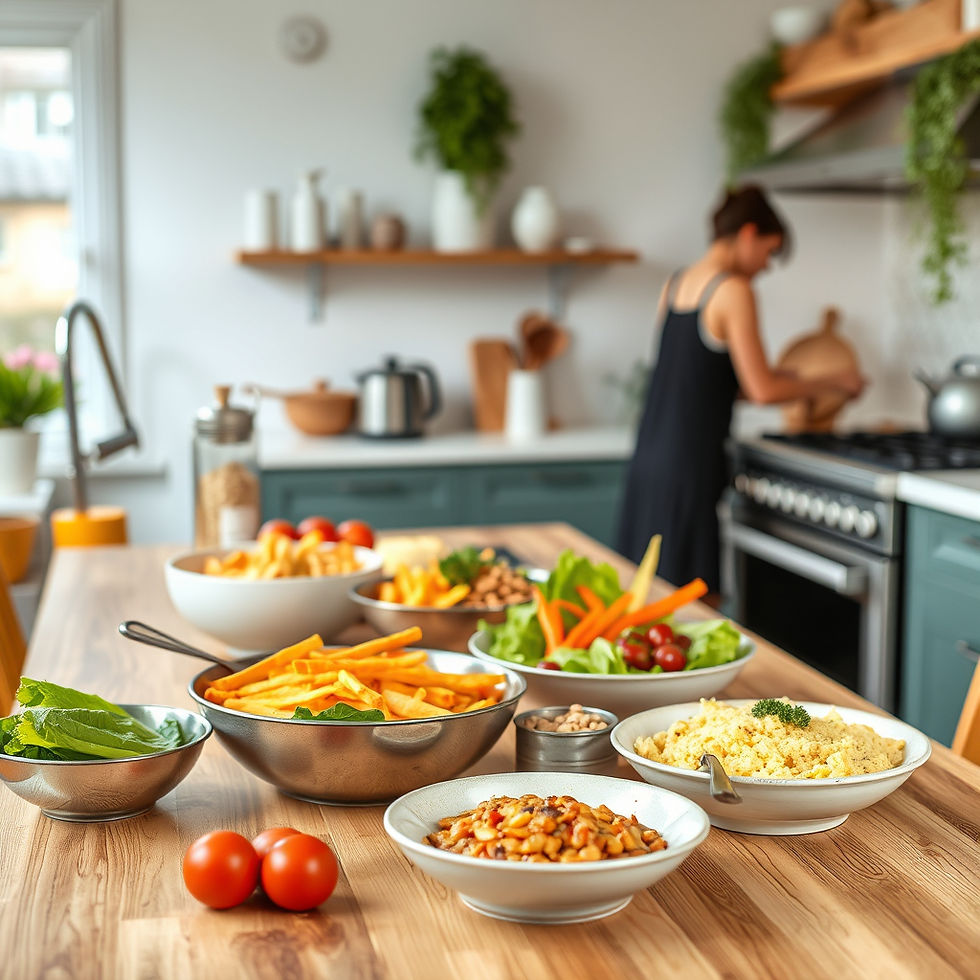
TIME is such a strenuous burden, especially for those who have none to spare. When you combine knowledge (knowing what to eat and why) with access (readily available foods you desire), you have the foundation needed for successful change. With just a few little tricks in any kitchen, balanced nutrition-dense meals can come together with just as much effort as UPF and often with less cost.
Batch cooking items like quinoa are a huge time saver, and if quinoa is too expensive, brown rice bought in bulk can do the trick. It can be used under a stew or chili, cold in a salad as a base, or in any bowl. It can be mixed with eggs and made into protein cakes with cheap added tuna. It can be rolled into balls to stretch this week's meat when used as the binder.
-There is absolutely no need for Hamburger Helper, when the cost of brown rice is the same, has more fiber and nutrients, and none of the added chemicals.
Making large batches of stews and soups can be extremely nutritious when the know-how is there. Instead of opening huge cans of soup, for the same price someone can make lentil stew as long as they have access to lentils, carrots, potatoes, and some seasonings, or a chili with lentils and beans. Both have huge amounts of protein and fill a lot of stomachs for quite a few days.
-We always had a scant bowl of tomato soup out of a can with grilled cheese sandwiches made with Velveeta and white bread. No nutrition whatsoever.
That same exact money could have bought healthy ingredients that cooked once could have fed us all week.
The knowledge wasn't there.
The time spent would have been actually less, cooking one day instead of just that one night.
Lead by example and find help in the kitchen. Yes, time is difficult to find, but what makes tasks completed faster? Help. If a ton of kids is why you don't have time, put them to work! By including children in a couple of hours of healthy cooking, you are not only getting free labor - but you are also now passing on a wealth of information and breaking the cycle of nutrition-as-privilege. Involving family in this practice builds strength, increases communication, nurtures a sense of belonging and all of these things are badly needed in places where surviving models all behavior.
-Taking just two hours a week together, preparing foods while discussing why each ingredient is beneficial and how they all come together for a balanced meal is so incredibly GOOD. Not only is the food healthy, but the time spent together is healthy and the knowledge gained is something no one can ever take away.
"Functional nutrition can play a crucial role in impoverished communities by providing education on healthy eating and access to nutritious foods, which helps improve overall health and reduce food insecurity. Programs like the Expanded Food and Nutrition Education Program (EFNEP) empower individuals with skills to make informed food choices, ultimately fostering healthier communities" - RHIhub
Hopefully some of this information will enlighten those of you lucky enough to have a device and internet and time to read it, knowing there are people who have none of these things. Taking the availability of healthy foods for granted is indeed a privilege most overlook. Knowledge is key for EVERYONE.
Do some of you take food to local food banks? Make sure it is healthy. Try to drop dried goods like beans and lentils, quinoa and brown rice. Be purposeful in what you donate, and consider "What would truly be helpful here?" Be part of the solution.

References


Comments